New RGM Academy Course "PPA: From OBPPC to Global Roadmap" 👉 Pre-register now

Pricing

Maximize Revenue and Profit with Shopper-Aligned Pricing Strategies

g2badge-1

Unlock growth potential with all-in-one RGM platform. Optimize pricing with data-driven insights, execute tailored actions, and achieve your revenue and profit goals through precise, predictive, and prescriptive solutions.

Pricing-1

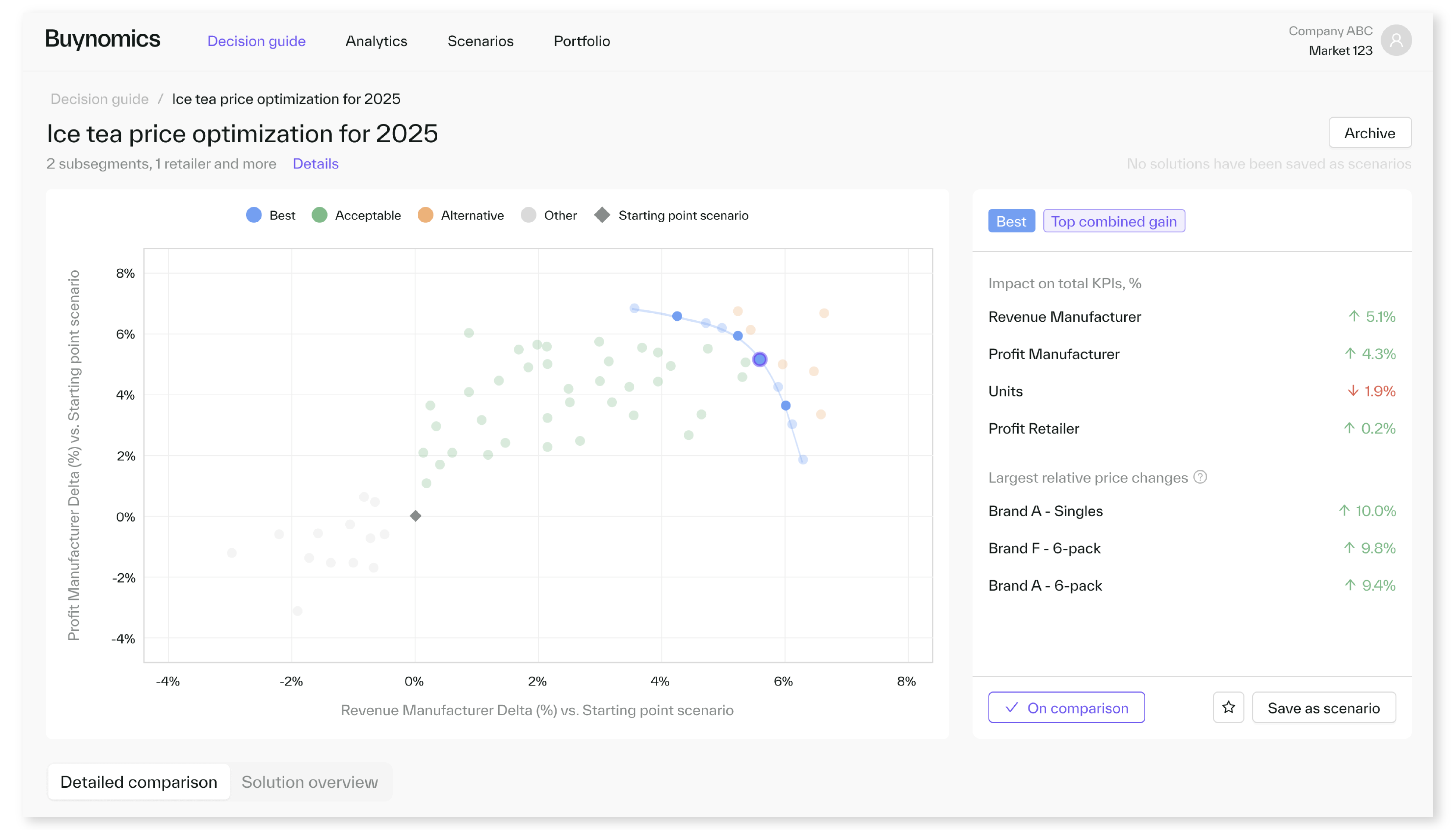
Gain Full Transparency Into the Impact of Your Pricing Decisions

Receive Optimized Pricing Recommendations

Move beyond traditional pricing techniques and mitigate market volatility with prescriptive solutions that drive revenue!

  • Receive tailored recommendations on the best-performing pricing strategies to reach your goals based on your target KPIs.

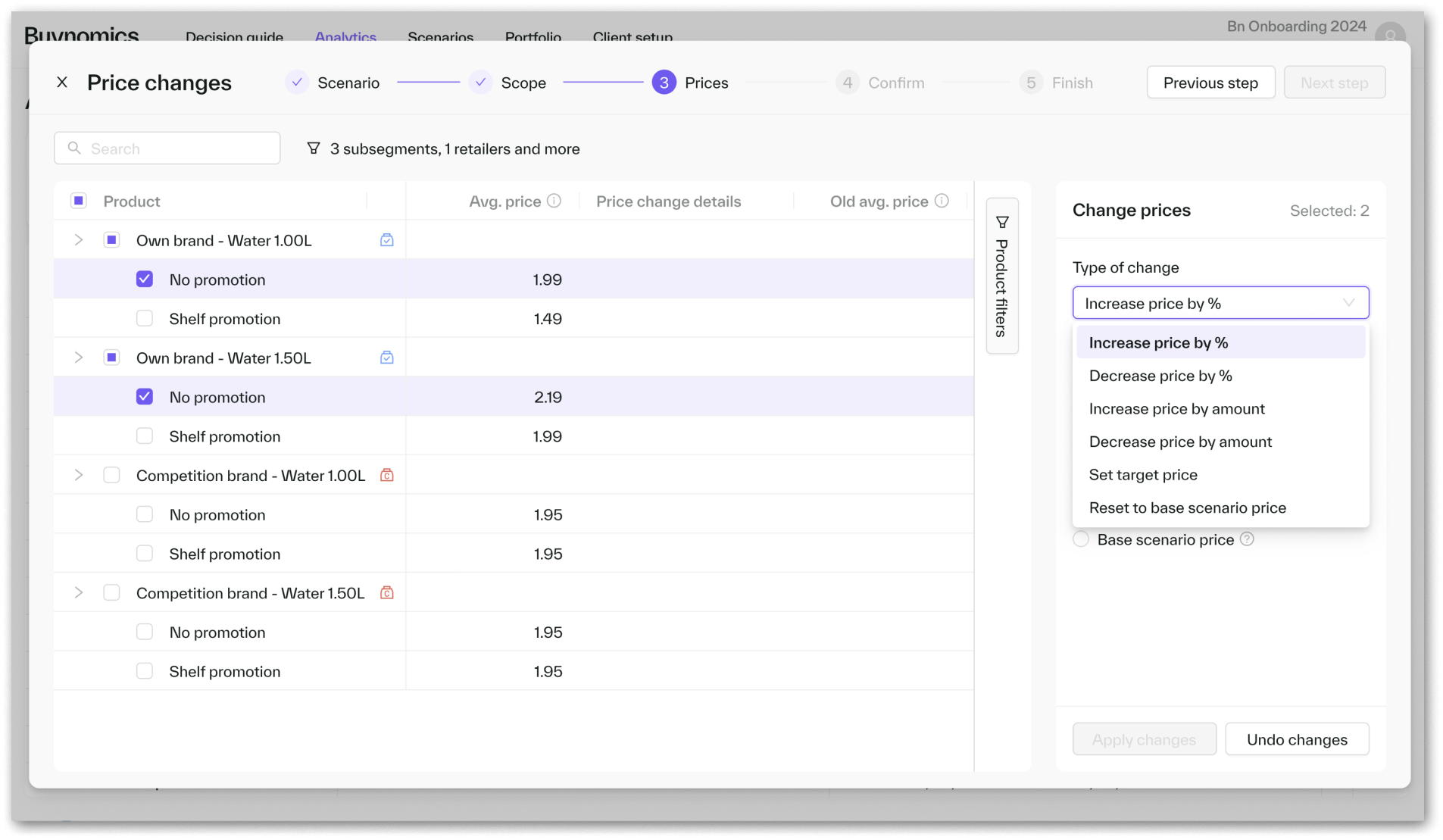
  • Consider pricing constraints while maintaining required margins, staying competitive, and avoiding supply chain issues. 

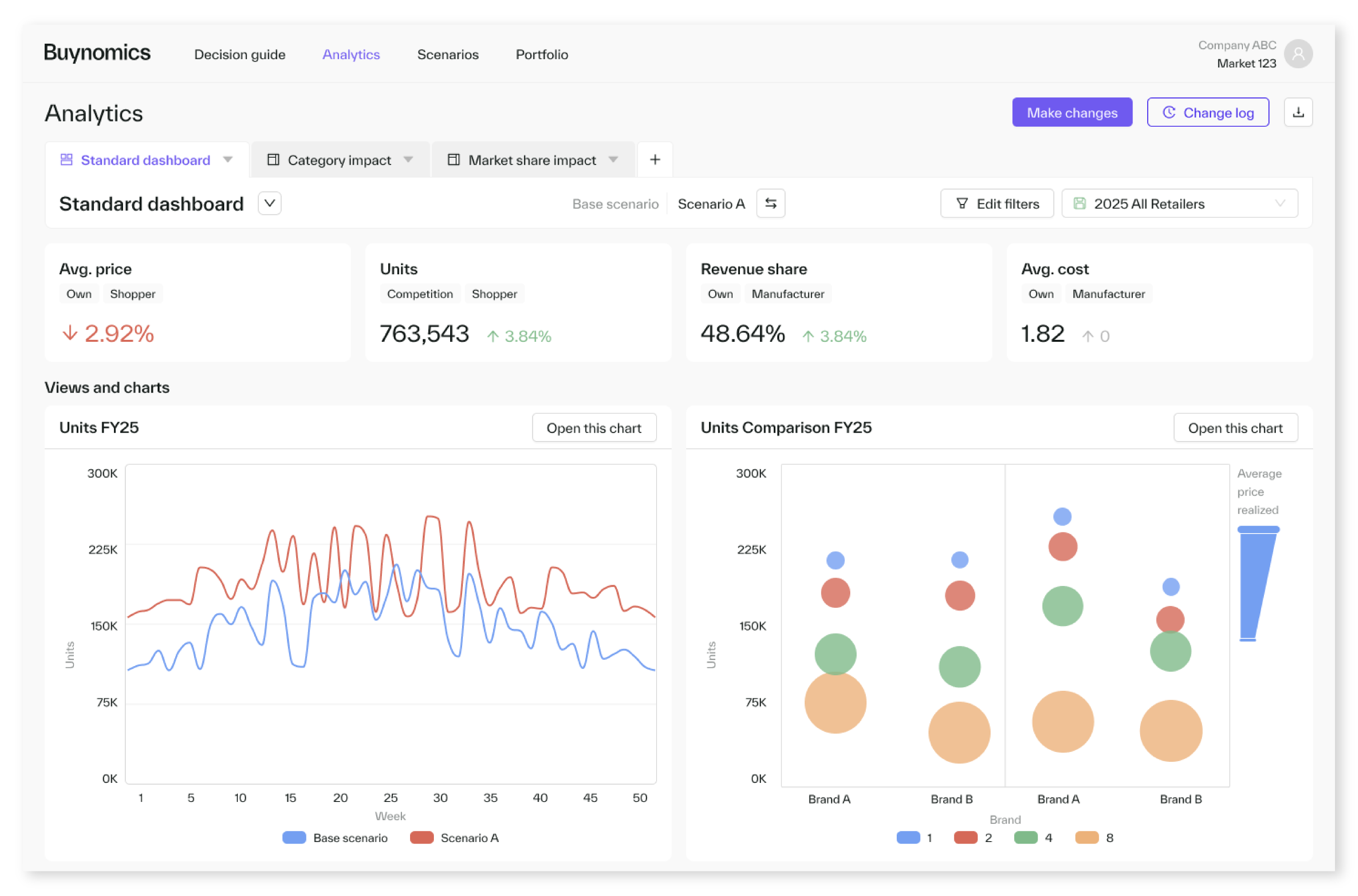
Analyze Pricing-Related Impact

Understand shoppers' reactions to price changes in advance and evaluate the effects on your category, portfolio, and single SKUs, all while considering each RGM lever.

  • See the impact of one or many price changes considering cannibalization, inflation, changing costs, and portfolio changes.

  • Understand how changes in competitor pricing and promotional actions will affect your market share and how you can use it to your advantage. 

Act with Confidence

Steer your organization by leveraging instant feedback from millions of Virtual Shoppers to gauge how their real-life counterparts would react to your changes. 

  • Understand your pricing impact and elasticity in different scenarios, e.g., combined with product or promo changes, for optimal decisions.  
  • Consider manufacturer, retailer and shopper perspective at the same time and optimize for triple-win scenarios.

Base Your Decisions on Your Shoppers' Behavior

Buynomics' Virtual Shopper AI

Make informed commercial decisions and develop your RGM strategy with confidence, knowing how your shoppers will behave. 

Buynomics' platform is powered by a unique, cutting-edge Virtual Shopper AI that predicts your shoppers’ behavior and answers your key RGM questions holistically, considering all RGM levers. 

Achieve Your RGM Goals and Stay Ahead

Frame-Jul-15-2025-02-12-08-5080-PM

2-4% profit
impact*

Achieve up to 4% higher profit in your business by making more shopper-centric commercial decisions.

Frame-1-1

Up to 95%
predictive accuracy*

Gain insights you can trust. Buynomics is the only solution that forecasts shopper behavior with up to 95% accuracy. 

Frame-2-1

80% faster
decision-making

Reduce the time spent on manual analysis by up to 80%. Integrate various data sources and get best-in-class predictive accuracy.

*depending on data quality & completeness 

andrea

"Buynomics stands out for its accuracy, speed of analysis, and rapid implementation. We deployed it in just eight weeks - far faster than other tools that often take three months or more."

Danone_Logo_transparent background

Andrea Pezzillo

Head of Category and Revenue Growth Managment at Danone

pladis testimonial (1)

"Buynomics makes scenario planning effortless. The ability to compare multiple pricing and portfolio scenarios side by side, right next to our current setup, gives us instant clarity and confidence in our decisions."

pladis logo 2
Michael Giambra

Head of Commercial Strategy at pladis Global

Emma Swiers Dr Oetker
"Buynomics helped us to achieve incremental revenue and make faster, quicker, and smarter decisions that are very data-driven."
Dr.Oetker_Logo_transparent background
Emma Swiers

Executive Manager Net Revenue Management at Dr. Oetker


Buynomics Receives 2025 POI Best-in-Class Category Distinctions

POI BadgesOPPurple


Curious?

Let’s discuss 
how we can help you

FAQs

Can Buynomics price core SKUs?

Yes. Pricing core SKUs is one of Buynomics' main functions. Based on your preselected price range, the tool helps you identify the best prices for your SKUs relative to your KPI (e.g., maximum profit).

How are cannibalization effects of price changes analyzed?

Within the Buynomics tool, you can see the change in unit volumes across the entire product portfolio in a given segment after making a price, price pack architecture, promotion, or distribution change. These shifts can occur within your own products, between your products and competitors', or outside the category, representing shoppers who choose not to purchase at all. This helps you understand competitor interactions and cannibalization effects.

Can customer acceptance of different price points be predicted?

Yes. Customer acceptance of different price points can be predicted by the Virtual Shoppers AI. Buynomics estimates how likely shoppers are to accept a new price, substitute for another product, or exit the category. This allows teams to test price corridors, evaluate willingness to pay across segments, and identify optimal price points before implementing market changes.

How are price elasticities calculated for pricing decisions?

Elasticity is an output of the model based on buyer behavior, not an input to the model. Traditional models are generally elasticity-based, allowing you to see how price changes affect unit sales. This often does not account for the entire marketplace, including changes in alternative product pricing, competitor movements, or product changes.

Buynomics allows you to model those effects holistically across the market. As in real life, there is no single static elasticity for a product. Products interact with the entire market, and customers may switch among products or leave the category entirely.

Within a specific scenario, you can see what the price elasticity might be for that segment, but this number will vary as you adjust related variables.

Can Buynomics price core SKUs?

Can Buynomics price core SKUs?

Yes. Pricing core SKUs is one of Buynomics' main functions. Based on your preselected price range, the tool helps you identify the best prices for your SKUs relative to your KPI (e.g., maximum profit).

How are cannibalization effects of price changes analyzed?

How are cannibalization effects of price changes analyzed?

Within the Buynomics tool, you can see the change in unit volumes across the entire product portfolio in a given segment after making a price, price pack architecture, promotion, or distribution change. These shifts can occur within your own products, between your products and competitors', or outside the category, representing shoppers who choose not to purchase at all. This helps you understand competitor interactions and cannibalization effects.

Can customer acceptance of different price points be predicted?

Can customer acceptance of different price points be predicted?

Yes. Customer acceptance of different price points can be predicted by the Virtual Shoppers AI. Buynomics estimates how likely shoppers are to accept a new price, substitute for another product, or exit the category. This allows teams to test price corridors, evaluate willingness to pay across segments, and identify optimal price points before implementing market changes.

How are price elasticities calculated for pricing decisions?

How are price elasticities calculated for pricing decisions?

Elasticity is an output of the model based on buyer behavior, not an input to the model. Traditional models are generally elasticity-based, allowing you to see how price changes affect unit sales. This often does not account for the entire marketplace, including changes in alternative product pricing, competitor movements, or product changes.

Buynomics allows you to model those effects holistically across the market. As in real life, there is no single static elasticity for a product. Products interact with the entire market, and customers may switch among products or leave the category entirely.

Within a specific scenario, you can see what the price elasticity might be for that segment, but this number will vary as you adjust related variables.