Leveraging Technology for Data-Driven Revenue Management
Role and Tools of Revenue Managers
In this section, we explore the Revenue Manager's responsibilities, the role of an RGM department, and how they leverage technology and tools for data-driven revenue management and sustainable growth.
What Does a Revenue Manager Do?
The Revenue Manager drives the organization's revenue by applying the five RGM levers and serves as the architect of a manufacturer’s RGM strategy. They ensure its offerings align with shopper preferences and market demands while driving profitability and sustainable growth.
Revenue Managers need to understand what shoppers and retailers want, consider cost changes, assess innovations, and anticipate competitor moves to optimize their own product offer – all in accordance with the overall company objectives.
What Does an RGM Department Do?
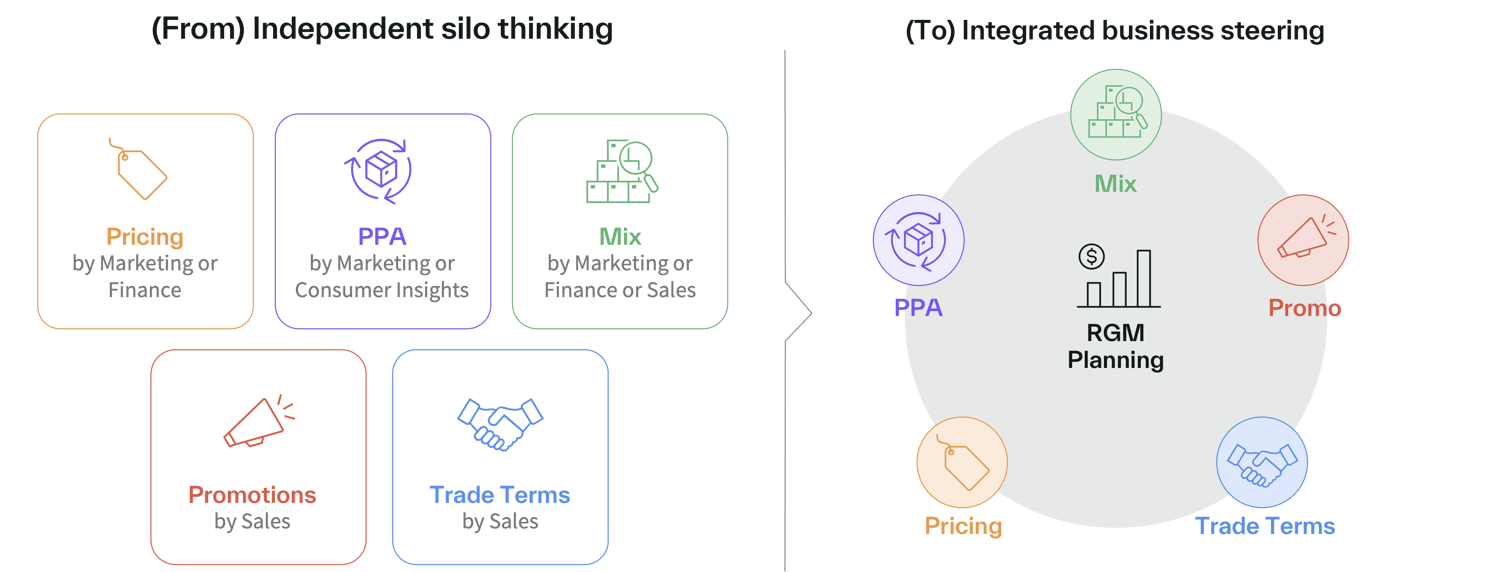
The RGM department ensures that strategies are coordinated across sales, marketing, and finance to drive cohesive, data-driven growth. This alignment is essential in an increasingly competitive market, where informed, agile decision-making can make the difference between success and stagnation. While individual revenue managers focus on executing pricing and revenue strategies, they operate within a larger RGM department and are responsible for cross-functional alignment.
What makes the RGM Department's task both complex and interesting is the increasing complexity of the playing field on which decisions must be made. Shoppers are becoming more informed and demanding, competition is becoming fiercer, and retailers are increasing the pressure on margins.
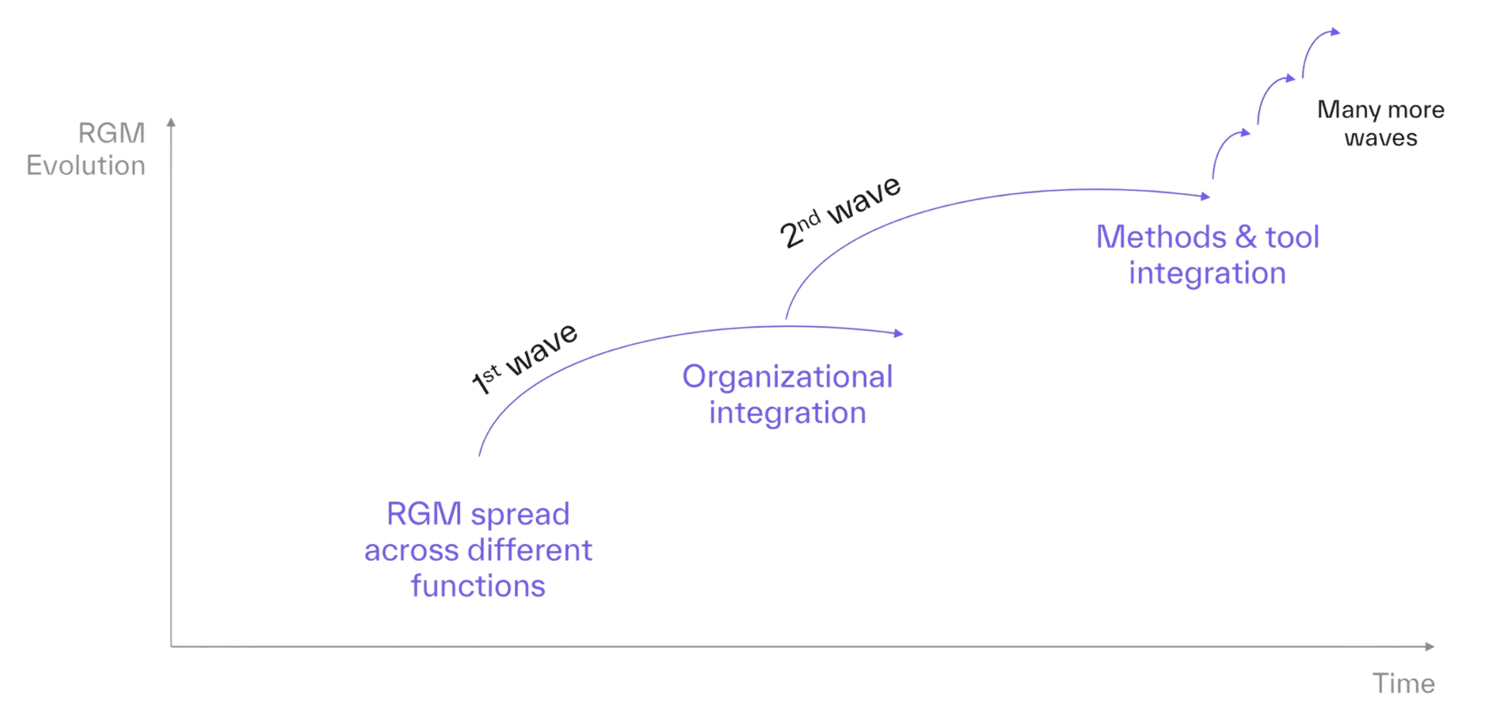
To succeed, an RGM department needs, first, to bring the organization together to scale efforts and embed RGM principles across the organization and, second, to have robust toolsets that enable them to work with their datasets efficiently, proactively, and holistically. We’ll dive more deeply into this below.
What Tools Do Revenue Managers Use?
Revenue Managers rely on a variety of tools to optimize pricing, promotions, and overall profitability. In this section, we explore traditional RGM methods to combating commercial challenges, their limitations, and how AI-driven solutions are transforming RGM decision-making.
Traditional Revenue Growth Management Tools and Methods
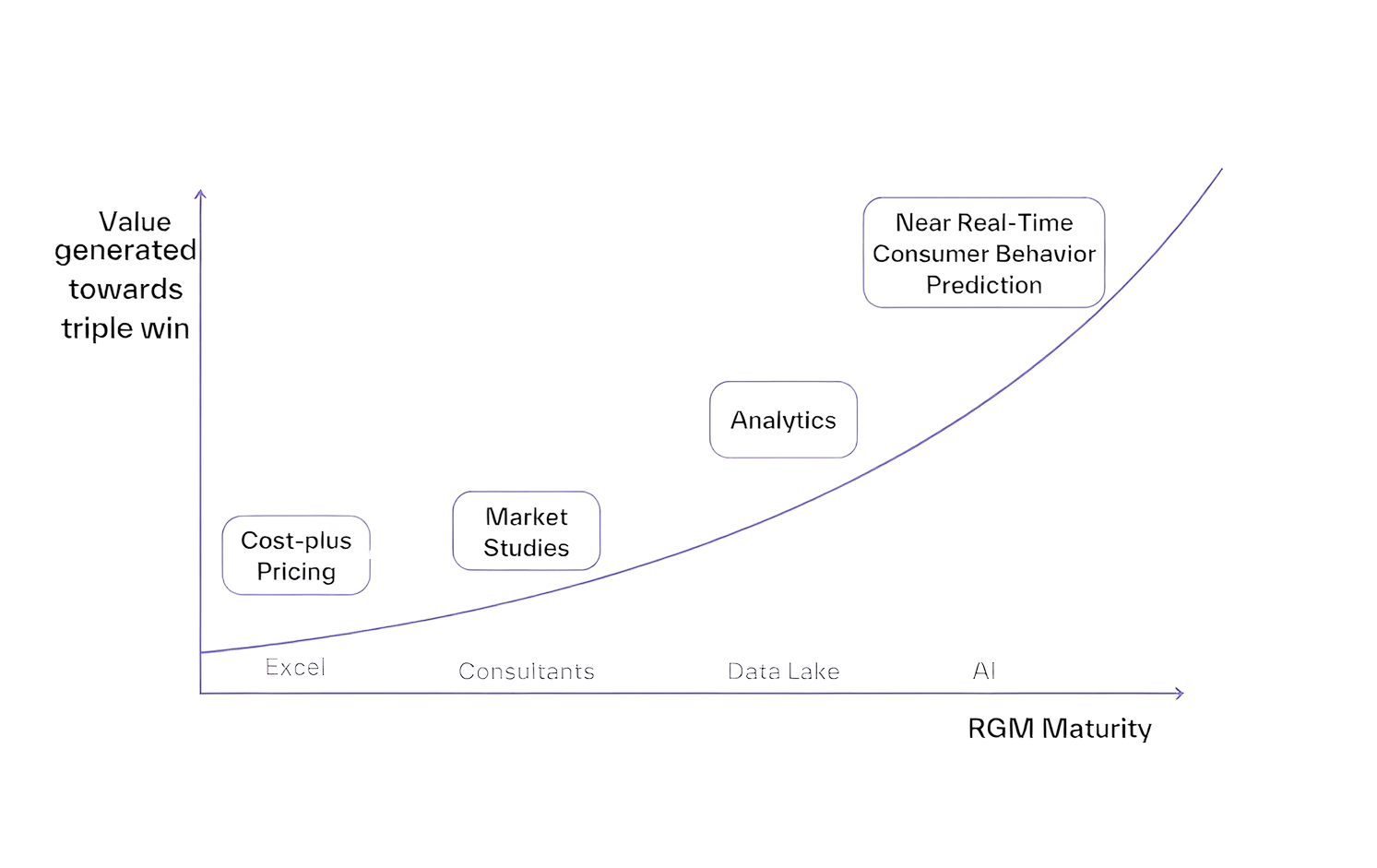
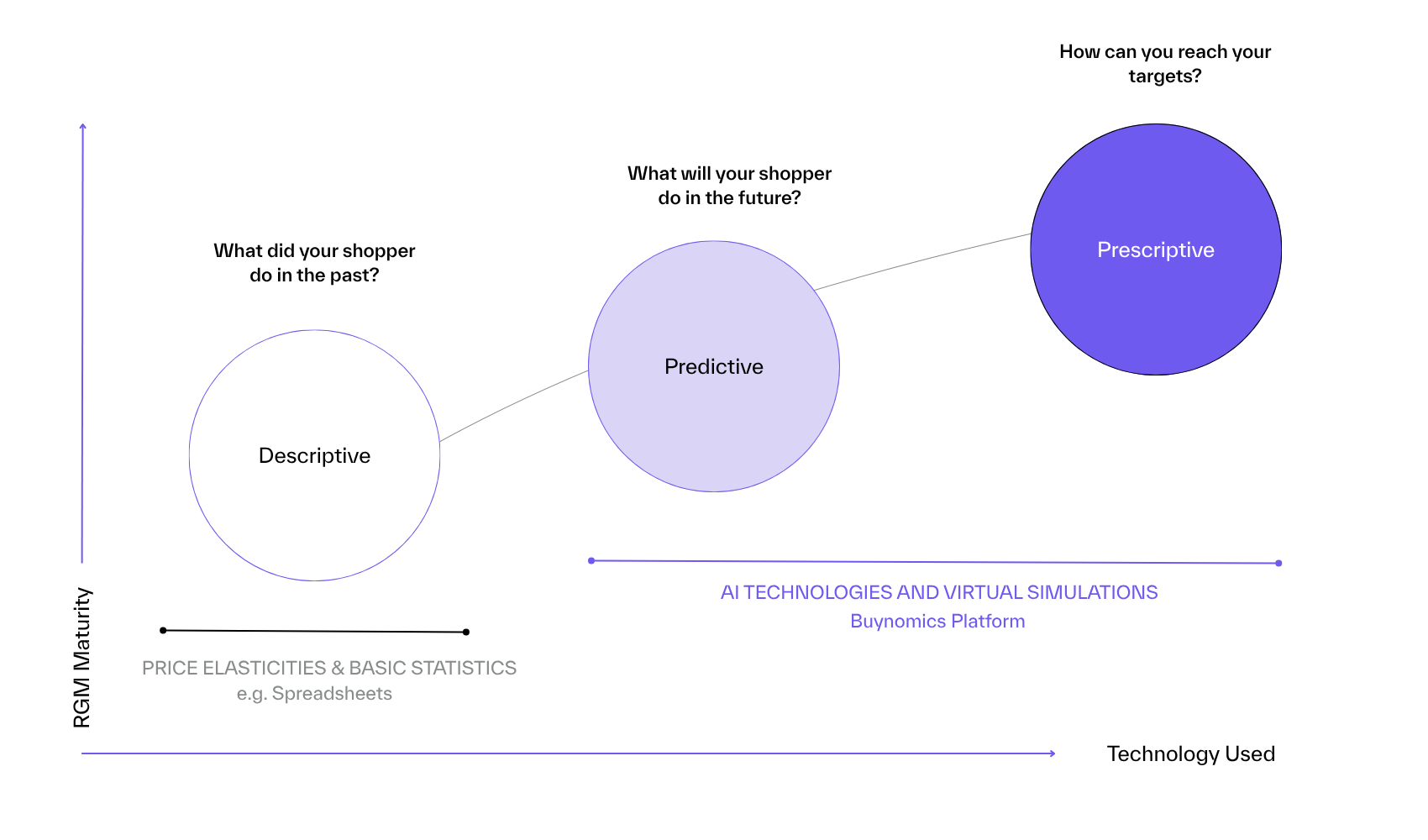
Traditional RGM tools have long relied on methods such as price elasticity analysis, often implemented through spreadsheets or conjoint studies done by different consultancies. Traditional methods often rely on historical data, meaning that while these methods provide useful historical insights, they come with significant limitations, some of which we cover here:

1. Slow & Reactive Decision-Making
Relying on historical data means basing decisions on past trends, not current market conditions. This provides descriptive insights, not actionable recommendations, leaving teams to rely on intuition or trial-and-error, often resulting in missed opportunities or slow change responses.

2. Limited Accuracy in Complex Markets
Multiple factors can influence real-world consumer behavior, such as market dynamics, competitor activity, and shifting consumer preferences. Yet basic, traditional models struggle to capture these elements accurately, meaning decisions are often made without considering these important factors.

3. Lack of Scalability in Data Processing
Spreadsheet-based or traditional methods can only handle limited data, making them impractical for businesses with large product portfolios or operations across multiple regions. With this limited data capacity in traditional methods, decisions are often made without the full scope of available data.
With the complexities described above, staying ahead in RGM requires more than refining methods. It demands leveraging AI solutions. By using AI, companies that shift from a reactive to a proactive approach can anticipate market changes, protect margins, and drive sustainable growth.
It is worth considering that while AI analytics give Revenue Managers greater access to data, not all AI-driven tools are equal. Addressing data fragmentation, analytics capabilities, and integration across RGM levers is key.
We will dive further into the advanced analytics Revenue Managers can use in our RGM Maturity section later in this article.
The Buynomics RGM Strategy Framework provides a structured approach to overcoming these challenges by aligning strategy, execution, people, and technology, helping organizations navigate market complexities, optimize decision-making, and drive sustainable growth.