
Navigating 6 of 2026’s Top RGM Challenges
The past few years have pushed Revenue Growth Management (RGM) into a more demanding phase. The last inflationary cycle rewarded speed and decisiveness. Price moves carried momentum, execution gaps were tolerated, and variance could be absorbed. Already in 2026, that buffer is gone. Inflation is easing, but commodity prices remain volatile, costs are rising, growth is uneven, and shoppers remain price-sensitive and cautious. The result is a narrower corridor for error.
For RGM leaders, the implication is simple: the same playbook will not deliver the same results. In recent years, CPG growth has been driven disproportionately by price increases rather than volume. McKinsey notes that “price growth has outpaced volume growth for years,” warning that this dynamic threatens long-term competitiveness and cannot sustain growth indefinitely.
Retailer and trade complexity is also rising, requiring RGM leaders to coordinate pricing, promotions, and assortment decisions while engaging retailers in new ways to manage evolving market dynamics(1). AI is quickly becoming essential for RGM, but not all AI is equally relevant when it comes to answering the commercial questions behind revenue and margin outcomes.
This article summarizes the most important macro, RGM, and technology trends shaping 2026, plus practical actions to turn them into an advantage.
.png?width=317&height=178&name=20251217%20Webinar%20Christmas%20(4).png)
Get the complete picture, watch the full expert session for real-world examples and insights.
How we identified the key RGM challenges for 2026
The trends below are based on three inputs:
- Ongoing conversations with RGM teams across industries and markets
- Patterns observed across pricing and RGM conferences
- A synthesis of economic and industry outlooks and AI trend tracking
Macro trends shaping RGM in 2026
-1.png?width=1200&height=675&name=Blog%20Quote%20Images%20(2)-1.png)
1. Slowing inflation and growth: less margin for error
Inflation is beginning to cool from recent peaks, and growth expectations in many regions have moderated. Across major economies, inflation is expected to drift lower through 2026–27, with temporary bumps in the U.S. but sub-target or near-target outcomes in Europe, Japan, and China as underlying pressures continue to ease.(2)
That is good news for consumers, but it creates a tougher environment for RGM teams. When inflation is high, the “pricing corridor” is wider, allowing companies to absorb more variance in outcomes. When inflation is low, price moves must be more precise, and competitor responses tend to be more conservative.
What this means for RGM in 2026
- Increased need to scenario-test decisions before they go live
- More emphasis on execution quality, not just strategy
A practical rule of thumb: in 2026, the cost of being “slightly wrong” increases.
“When inflation is very high, as it was in 2022, it is easier for pricing professionals to increase prices, and the need for extreme precision is lower. But when inflation drops to one or two percent, the corridor for price changes becomes much narrower. Decisions have to be far more precise. That is why RGM teams can no longer rely on pricing alone and need to work across multiple levers to balance portfolio decisions.” - Ingo Reinhardt, The 2026 RGM Playbook: Trends, Traps & Tech to Watch
2. Commodity and input cost pressure remains volatile
Even if headline inflation slows, cost volatility does not disappear. Commodity markets and input costs remain exposed to sudden swings from geopolitics, trade restrictions, and weather-related supply shocks, as recently seen with President Trump’s January 2026 tariff threat targeting imports from Denmark, Germany, and other European countries linked to Greenland.(3)
What this means for RGM in 2026
- Build faster processes to evaluate trade-offs between price, pack, and promotions
- Plan for ranges of outcomes, not single forecasts
3. Consumer sentiment and household pressure: value wins, not just price
Shoppers remain more price-sensitive than they were pre-inflation, translating into sustained trade-down, higher substitution, and stronger private-label performance across Europe.(4,5)
Private labels now account for 42% of total CPG value sales across the EU6 (France, Germany, Italy, Spain, the Netherlands, and the UK), rising to 44% in supermarkets, the most influential channel for both private labels.(6)
What this means for RGM in 2026
- Manufacturers need sharper segmentation and a more granular understanding of willingness-to-pay
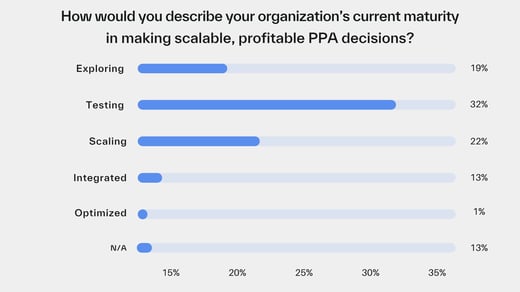
- Price pack architecture (PPA) becomes increasingly important
- Promotions need to be more targeted and ROI-driven
.jpg?width=317&height=178&name=072025%20RGM%20Academy%20Email%20banner%20(3).jpg)
Want more real-world examples of how PPA can be used to achieve sustainable growth? Our PPA Course walks you through this.
4) The end of price-only growth
One of the clearest shifts is that price-led growth is becoming harder to sustain. After several years in which price increases drove most CPG growth, accounting for more than 90% of sales growth since 2019, companies are now placing greater emphasis on protecting and rebuilding volume as inflation moderates.(7)
This is not only a market reality. It is also a capability challenge. If your RGM maturity level is low or your strategy is built primarily to support pricing actions, 2026 forces you to broaden the toolkit.
Not sure what your RGM Maturity level is? Take our RGM Maturity Assessment to find out.
What this means for RGM in 2026
- Growth requires holistic RGM, balanced across pricing, promotions, innovation, and volume
- Decisions need to account for interactions across the portfolio, not single-SKU impact
5) Shopper-centric RGM moves from aspiration to requirement
Many organizations still rely heavily on stated-preference research and static elasticity assumptions to forecast impact. The challenge is that these approaches often struggle to capture real-world complexity: substitution patterns, cross-effects, nonlinear demand response, and shoppers' behavior in context.
Shopper-centricity has long been a goal in CPG. The difference today is not the language but the decision process. Many manufacturers still rely on research that captures what shoppers say they might do, while fewer make decisions grounded in observed shopper behavior and realistic market interactions.
What this means for RGM in 2026
- A stronger need to test “what-if” scenarios before decisions reach the market
- The ability to see how shoppers switch across brands, packs, and competitors
- A clearer view of incrementality and cannibalization, leading to more confident decisions and a competitive advantage
RGM Technology trends shaping 2026
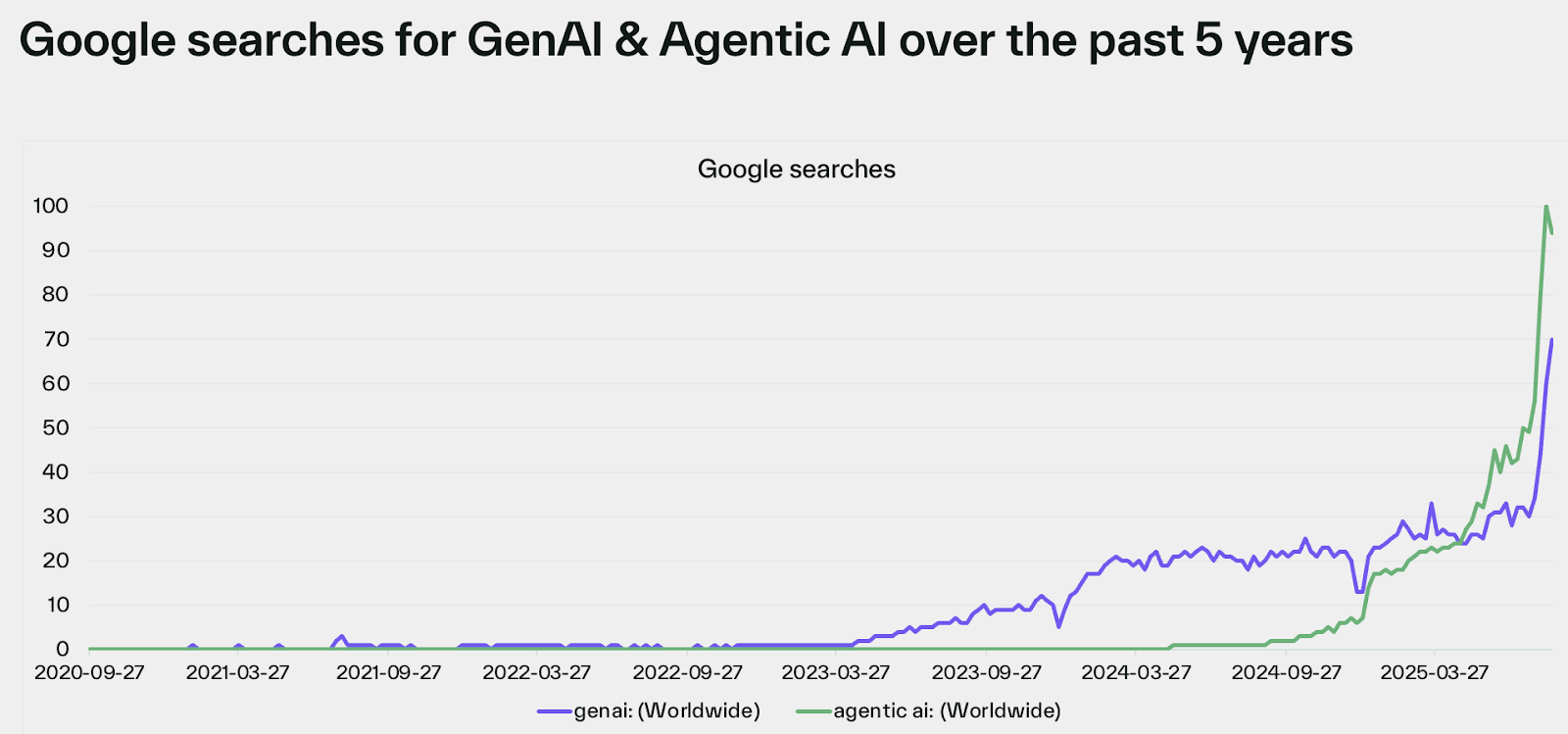
6) Increased importance in using the right type of AI technology
AI is only valuable for RGM when it improves decision-making, not when it is adopted to chase hype or tick a box. As the Buynomics Future of RGM Report found, 44% of CPG RGM professionals are still piloting limited use cases, and only 3% have fully integrated AI into their RGM processes. Despite the early stage of AI adoption, our report also found that organizations already using AI cite better scenario planning (25%) and faster decision-making (18%) as emerging benefits.
Scenario planning with AI is the future, but it must be built on the right type of AI. While generative AI creates content and agentic AI pursues goals, agent-based modelling focuses on predicting behaviour (learn more about the different AI approaches and which are most relevant for RGM in our webinar).
Buynomics’ proprietary Virtual Shoppers AI was developed to support commercial decision-making grounded in shopper behaviour. It enables agent-based simulations that predict how shoppers are likely to react to changes in price, promotion, or pack architecture.
Built on principles from behavioral economics and decision theory, the model creates Virtual Shoppers that replicate real purchasing behaviour, including switching, cannibalization, and interactions with competing products. This allows manufacturers to test decisions in advance and truly place the shopper at the center of commercial decision-making.
For more information on the key layers that need to be considered for a GenAI RGM tool, download our Generative AI for Revenue Growth Management whitepaper.
Turning 2026 into an RGM advantage
RGM is not getting simpler. In 2026, the winners will not be the RGM or commercial teams that simply run more analyses. They will be the teams that put the shopper at the center of commercial decision-making, accurately forecasting shopper behavior, generating predictions quickly, and executing RGM decisions with confidence.
If you want to get started making the necessary changes to turn 2026 into RGM advantage, request a demo today to see how Buynomics can help you futureproof your RGM strategy and make better RGM decisions, faster.
(1) McKinsey
(2) Morgan Stanley
(3) Reuters
(4) BCG
(5) McKinsey
(6) Circana
(7) McKinsey
.jpg?width=50&height=50&name=20251026%20Webinar%20JBP%20(1).jpg)
.png?width=520&height=294&name=Commodity%20Price%20Index%20Evolution%20(Jan%202015%20=%20100).png)