New RGM Academy Course "PPA: From OBPPC to Global Roadmap" now live 👉 Enroll today

Buynomics RGM Academy
Designed for RGM Leaders | Led by Industry Experts

Price Pack Architecture: From OBPPC to Global Roadmap

author
Ivan Tretyakov

Director Product Innovation, Buynomics

colin round
Colin McQuay

Senior Director, Head of Strategic RGM, Nestlé USA

PPA as a Company-Wide Routine

In this introduction, Ivan Tretyakov and Colin McQuay introduce the course and core PPA foundations, clarify key definitions, and explore why this PPA perspective is needed.

Sources:
  • Robert Baker (22.04.2025), CPG brands are rewriting the playbook for profitable growth and turning to an underutilized but highly effective lever: Price Pack Architecture (PPA)., Roland Berger, Access here
  • McKinsey & Company (22.09.2022), Revenue growth management: Building capabilities to sustain impact, McKinsey & Company, Access here
Module Summary

  • Why Price Pack Architecture is shifting from a packaging exercise to a core driver of mix, margin, and sustainable growth
  • How PPA, when done right, becomes a repeatable, data-driven system with measurable EBIT and profit impact
  • An overview of the eight modules that move PPA from framework to execution
  • Colin McQuay’s perspective on why PPA fails when it stays in PowerPoint
  • What it takes to embed PPA into commercial processes and turn strategy into shelf-ready execution

Key Takeaways

  • PPA only drives impact when embedded as a repeatable system, not treated as a one-off project

  • The real value of PPA comes from execution at shelf and in the P&L, not from better slides

  • Sustainable PPA requires leadership, governance, and cross-functional alignment across the organization

Further Resources

20250507 Rethinking PPA-2
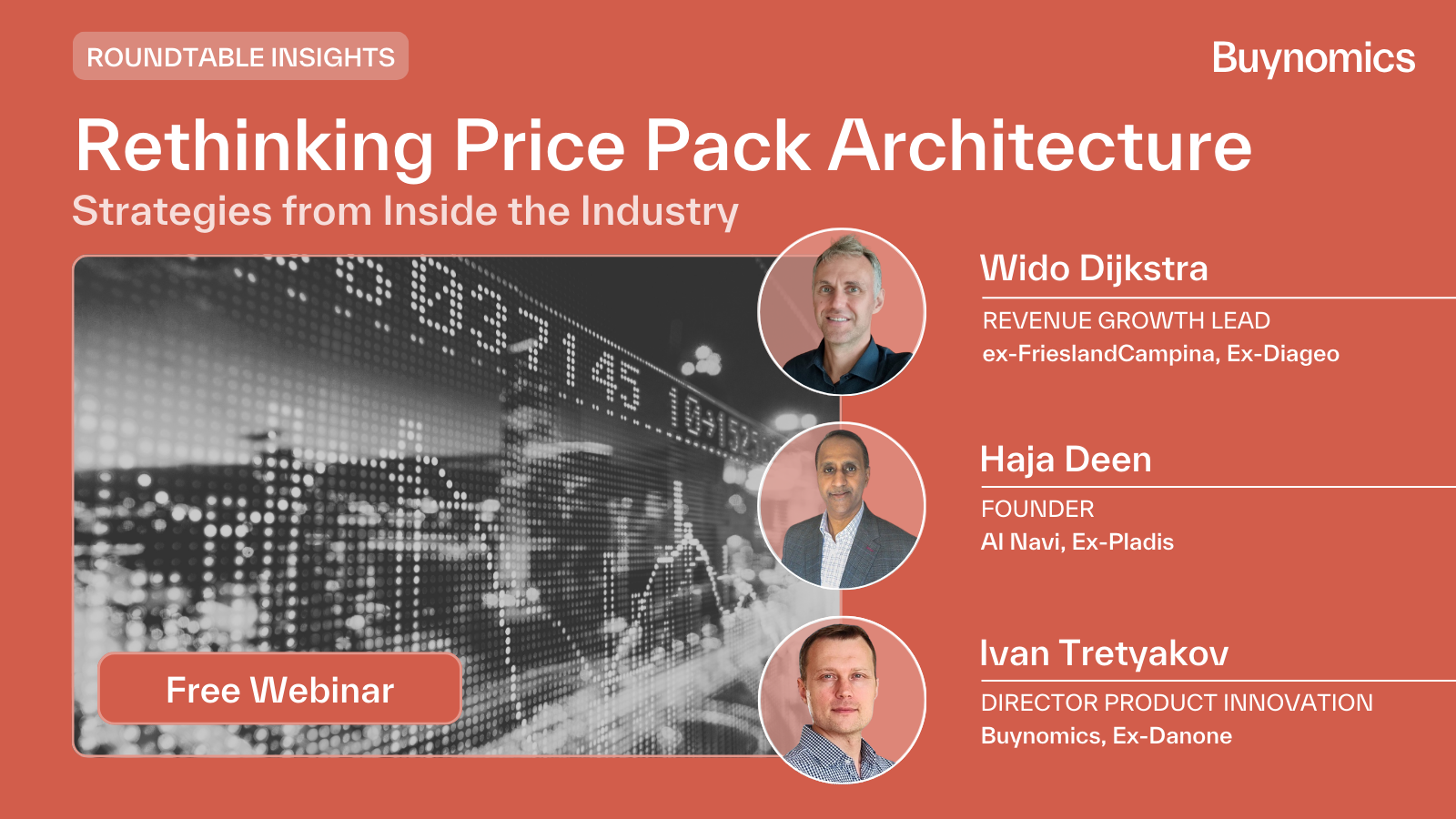
Rethinking Price Pack Architecture

Experts share how PPA connects pricing, promotions, and retailer collaboration, and how simulation turns reactive decisions into scalable growth strategies.

PPA Cheat Sheet 16x9
Price Pack Architecture Cheat Sheet

Discover key insights on optimizing the arrangement of product sizes, formats, and price points to meet shopper preferences and boost profitability.

What to Expect Next

In the following modules, you'll learn how to turn PPA into a structured, repeatable growth system. We begin with embedding PPA across functions and linking it directly to P&L impact. You'll then deep-dive into OBPPC, innovation and portfolio strategy, competitive dynamics, and inflation responses.


From there, we explore retailer co-creation and category strategy, followed by governance models that align global direction with local execution. The course concludes by translating all concepts into clear initiatives and playbooks, helping you move PPA from slides into real, scalable shelf impact.

About the Course

Welcome to RGM Academy, Buynomics’ executive learning platform for advancing modern Revenue Growth Management.

Move from scattered Price Pack Architecture (PPA) tweaks and isolated willingness-to-pay conjoint studies to a single, coherent PPA program that sits at the centre of commercial decision-making.

Strategic Capabilities You’ll Gain

Completing the "Price Pack Architecture: From OBPPC to Global Roadmap" course will enable you to:

  • Embed PPA effectively beyond the RGM team, linking pack decisions directly to P&L impact and making PPA a shared responsibility across functions.

  • Understand the OBPPC framework and how to evolve it from basic grids into a behavior-driven tool grounded in occasion-based insights and price perception.

  • Use PPA to guide innovation and portfolio strategy by defining clear ladders, identifying whitespace, and aligning pack design with strategic pricing intent.

  • Learn how to factor competitor pack and price moves into your PPA decisions, knowing when to lead, follow, or deliberately differentiate.

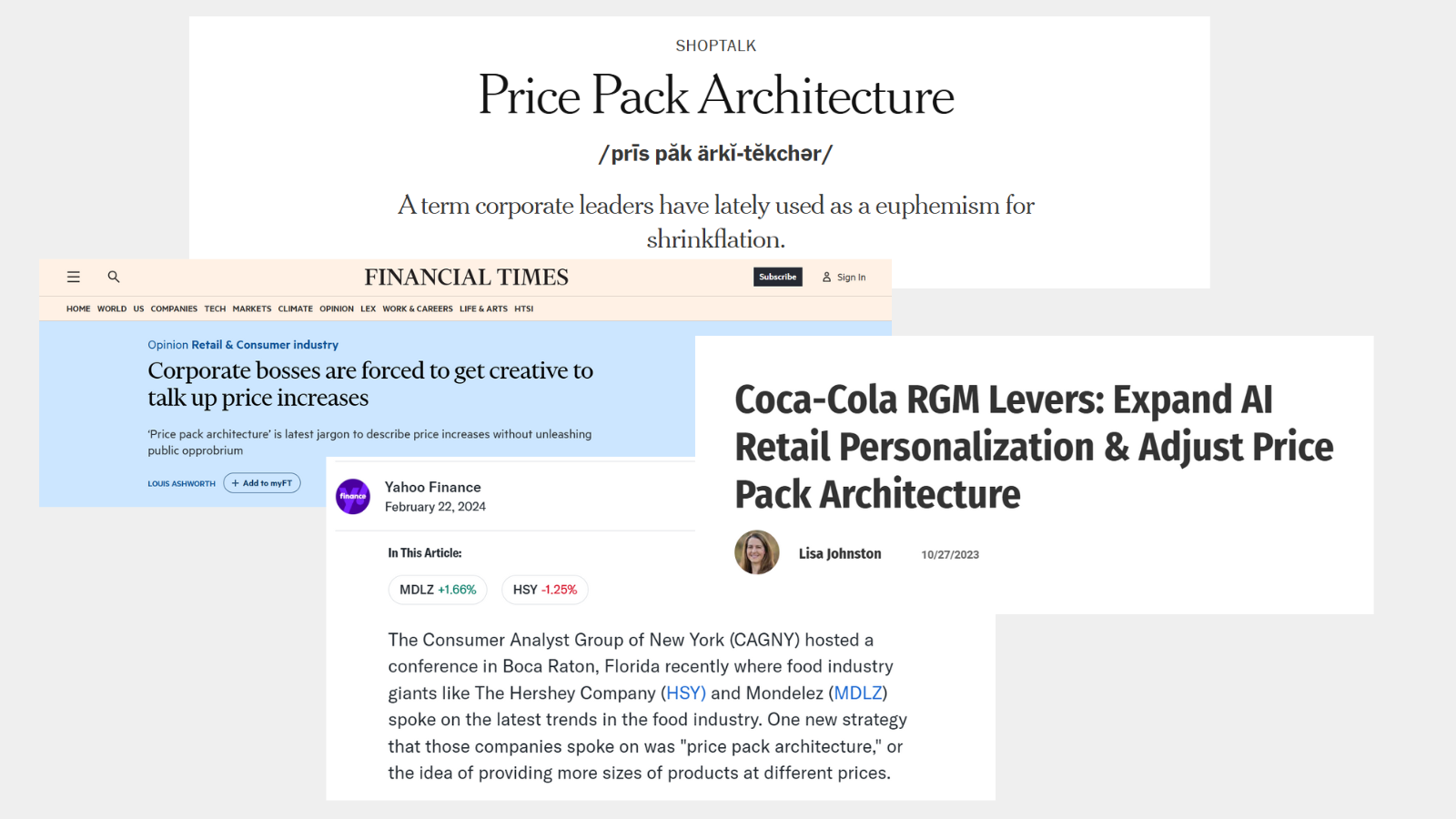
  • Apply a structured PPA framework to navigate inflation and shrinkflation, turning macro pressure into deliberate, value-preserving decisions.

  • Design a scalable PPA governance model that aligns global principles with local execution while maintaining consistency, accountability, and speed.

Course Structure

Eight modules guiding you through the whole journey:

  • Each module includes an Expert Speaker video and supporting content, with insights from different areas of the industry
  • Access downloadable resources to apply learning at your own pace

Why learn with Buynomics?

At Buynomics, we work with global leaders across industries to redefine Revenue Growth Management through AI-driven decision-making.


This course distills real-world insights and proven frameworks into a practical format you can apply immediately.

Overview: PPA: From OBPPC to Global Roadmap> Module 01: Embedding PPA in Your Organization

Colin McQuay_profile picture_circle
Colin McQuay

Sr. Director & Head of Strategic Revenue Management Nestlé USA

Embedding PPA in Your Organization

Redefine PPA as a structured, cross-functional growth system rather than a one-off pack change or reactive exercise.

Module Summary

Colin McQuay reframes PPA as a structured, cross-functional growth system rather than a reactive pack exercise. He walks through the core steps of effective PPA, from understanding category and portfolio roles, to ideating against clear problems, evaluating ideas through desirability, feasibility, and viability, and embedding decisions into organizational processes. The focus is on moving PPA from analysis to execution, ensuring it delivers portfolio-wide impact on shelf and in the P&L.

Key Takeaways

  • PPA is a structured method to drive growth and margin improvement, not a management exercise.

  • PPA assigns a clear role to every portfolio item, grounded in shopper needs and consumer habits.

  • PPA requires cross-functional ownership across marketing, category, finance, insights, and operations.

  • Build a strong PPA plan in three steps: understand category/consumer needs, ideate solutions, simulate options to select the right bets.

  • Evaluate ideas through three filters: desirable, feasible, viable.

  • To get concepts onto shelves: involve key retail partners early and align them to the objective.

  • Anchor PPA into how the business already runs by mapping internal processes and linking PPA activities to them.

Further Resources

20250326 Webinar Data-Driven RGM with BIC Rectangular Image Green Recording-2
Data-Driven RGM with BIC

See how leading RGM teams at BIC turn data into credible, retailer-ready actions, helping you apply the frameworks from this course to move from analysis to execution and drive a true triple win in the market.

Cover Future of RGM Report 2026 Web Display
Future of RGM Report 2026

PPA can't be considered in isolation. The Future of RGM Report 2026 provides insights across pricing, promotion, mix, trade terms, AI & organizational readiness to help you understand the broader forces shaping RGM.

What to Expect Next

Next, we dive into the OBPPC methodology, exploring how Occasion, Brand, Pack, Price, and Customer logic create a more precise, behavior-driven foundation for PPA across channels and shopper contexts.

Overview: PPA: From OBPPC to Global Roadmap> Module 02: OBPPC Foundations: From Concept to Practice

doug-1
Doug Hampshire

Head of Customer Value, Buynomics

TCB9S8XEK-U072AG17YQ0-1fc23cde664e-192
Jessy Bazan Stewart

Sr. Customer Value Manager, Buynomics

Introduction to OBPPC

Go step by step through Occasion, Brand, Pack, Price, and Channel to define the appropriate competitive frame before discussing pricing. Learn how OBPPC clarifies price sensitivity, portfolio roles, and channel dynamics, making pricing decisions easier to justify, execute, and scale across markets.

Achieving the Triple Win Through OBPPC as a Manufacturer

Two real-world OBPPC case studies show how teams use scenario simulations to reframe pricing and pack decisions based on occasion, price perception, and channel context, unlocking a triple win for manufacturer, retailer, and shopper.

Module Summary

Defining the right competitive frame is the foundation of effective Price Pack Architecture. OBPPC moves pricing discussions away from broad category averages and toward the specific purchase context, clarifying how Occasion, Brand, Pack, Price, and Channel shape shopper choice and real price sensitivity.


This module explains how OBPPC brings structure and a common language to complex portfolios, helping teams anchor decisions in how shoppers actually compare options at the moment of purchase.


You’ll see the framework applied in practice through case studies demonstrating how scenario-based simulations and context-driven thinking unlock smarter PPA strategies and deliver measurable wins for manufacturers, retailers, and shoppers alike.

Key Takeaways

  • Pricing decisions only make sense when you define the correct competitive frame first
  • OBPPC narrows analysis to products shoppers genuinely see as alternatives in a specific moment
  • Price sensitivity becomes clearer when anchored in Occasion, Brand, Pack, and Channel rather than broad category averages
  • The same product behaves differently across channels because expectations around price, convenience, and urgency change
  • Pricing must account for both customer and consumer dynamics to reflect real decision power
  • OBPPC provides a structured foundation for building price pack architecture that works in real-world buying situations

Further Resources

PPA Blog Image Resized
The Power of PPA for Revenue Growth

Learn why traditional, heuristic-based approaches to PPA fall short and how AI-driven Virtual Shoppers enable a holistic, shopper-centric optimization of packs, prices, and portfolio interactions,

imgi_33_Webinar General Mills Developing a PPA Program Jamie Green-1
Developing PPA with General Mills

Build a strong, repeatable PPA capability by anchoring pack and price decisions in shopper behavior, embedding cross-functional ownership, and balancing growth-driven and tactical initiatives.

What to Expect Next

Next, explore how PPA shapes innovation and portfolio strategy, showing how to design price ladders, tiered architectures, and pack formats that guide shopper choice while aligning elasticity insights with long-term commercial intent.

Overview: PPA: From OBPPC to Global Roadmap> Module 03: Innovation, Portfolio Strategy, and PPA
author
Ivan Tretyakov

Director Product Innovation, Buynomics

Innovation, Portfolio Strategy, and PPA

Discover how to use PPA as a strategic lens for innovation and portfolio design, aligning pack architecture, price ladders, and elasticity insights to guide smarter long-term commercial decisions.

Sources: 

  • NielsenIQ (21.07.2021), Product innovation that breaks the mold: 3 key features of Breakthrough Innovation winners, Access here
  • Stephanie Cernivec (15.08.2014), Nielsen: 85 percent of new products fail in the marketplace, Access here
  • Katy Askew (18.03.2019), Most new products fail: Implicit sensory testing can help beat the odds, Access here
  • Rafi Mohammed (10.2018), The Good-Better-Best Approach to Pricing, for Harvard Business Review, Access here
  • PepsiCo (2025), Earnings, Access here
  • Kraft Heinz (13.01.2026), HEINZ Unveils the First Fry Box with a Built-In Condiment Compartment in Eleven Countries Across the Globe, Access here
  • Coca-Cola (10.08.2025), Convenient Size at the Convenience Store: Coca‑Cola Mini Cans Are Here, Access here
  • Matt Beckett, et al. (21.05.2020), A Revenue Management Reset in Consumer, for BCG, Access here
  • Marcus Bokkerink, et al. (2017), How Net Revenue Management Boosts the Top and Bottom Line, for BCG, Access here
  • Ray Florio (03.10.2019), Pricing Elasticities: CPGs Renewed Focus on Pricing, for TotalRetail, Access here

Further Resources

Tool Spotlight Pricing Webinar
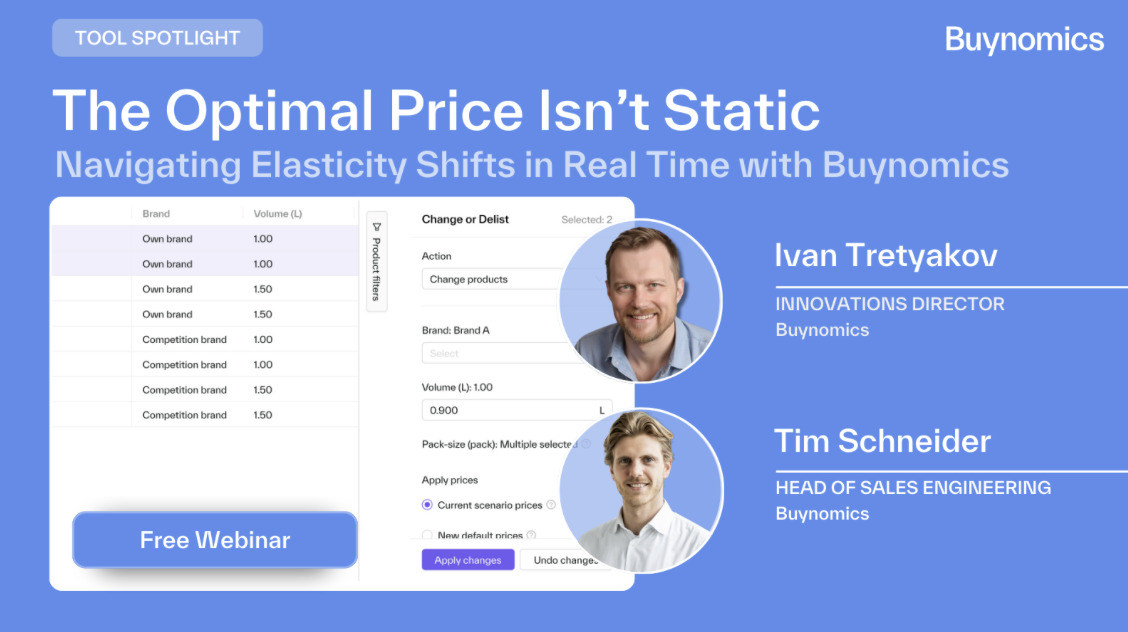
Navigating Elasticity Shifts in Real Time

Challenge the limits of traditional price elasticity thinking and see why PPA decisions require a broader, context-based approach that reflects real shopper behavior.

PPA Tool Spotlight Webinar
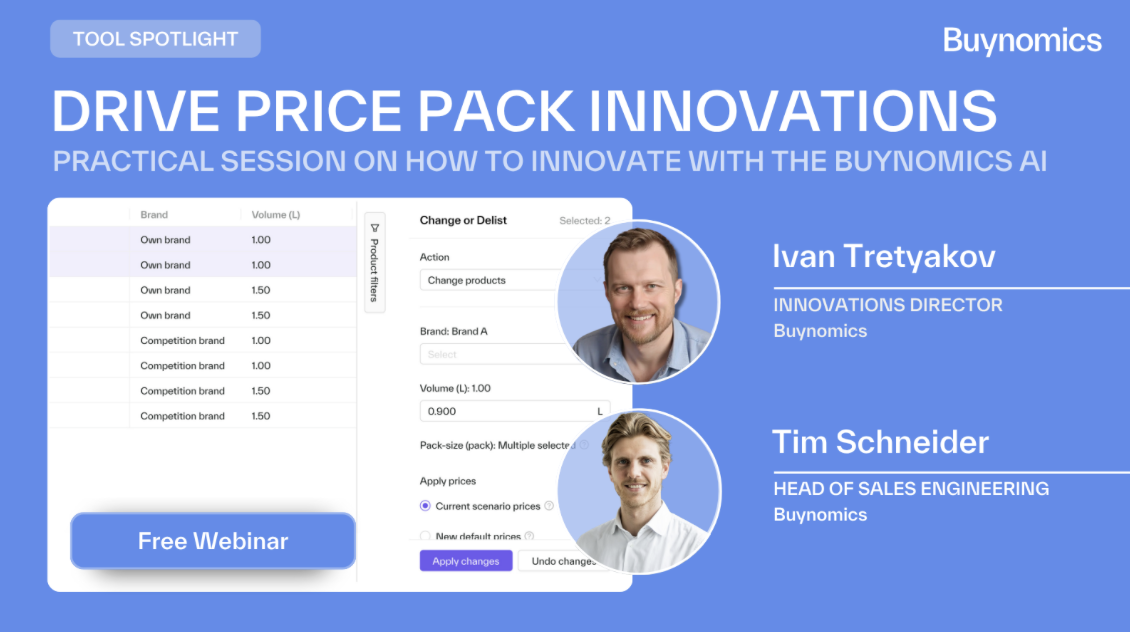
Driving Price Pack Innovation with Buynomics

Watch a practical tool walkthrough how to simulate pack-led innovation, compare scenarios, and align manufacturer and retailer outcomes when portfolio decisions drive growth.

Case study header
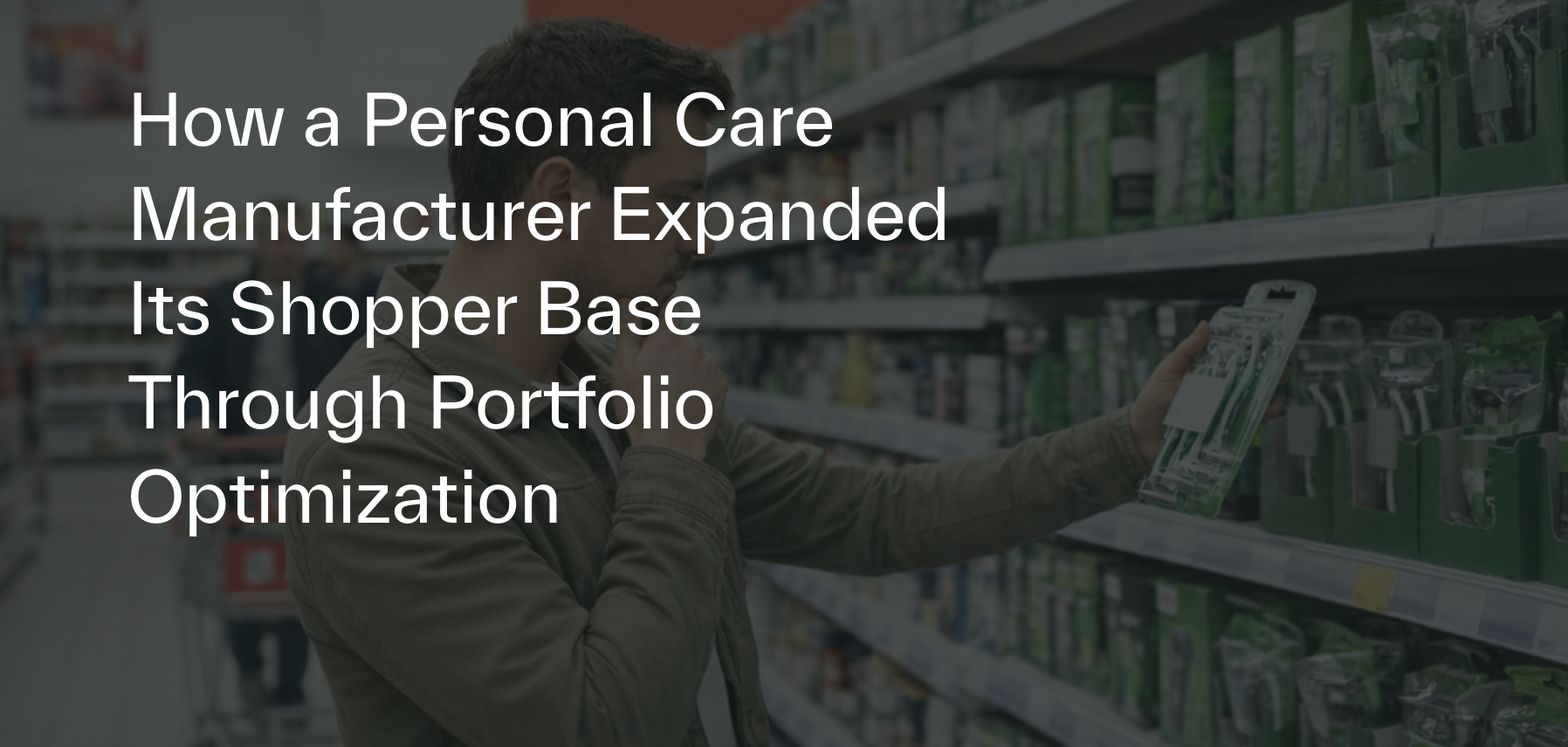
How a Personal Care Manufacturer Expanded Its Shopper Base Through Portfolio Optimization
In this case study, a manufacturer faced intensified competition in the drugstore channel and wanted to reassess its shaver system pricing and portfolio architecture. Read the full case study and the scenarios tested.

Module Summary

Explore how to use PPA to shape innovation and portfolio strategy, from whitespace analysis to designing good/better/best architectures and aligning pack formats with price ladders and margin tiers. It also examines the limits of elasticity, showing how to balance analytical insights with commercial judgment when pricing signals conflict with long-term pack strategy.

Key Takeaways

  • Innovation must fill a distinct portfolio role that is not already served.
  • Whitespace comes from mapping occasion, price point, and channel, then targeting demand with inadequate supply.
  • Portfolio structure should follow Good–Better–Best to clarify trade-ups and prevent overlap.
  • Pack strategy has three levers: size signals occasion, format signals value, design creates pricing power.
  • Elasticity explains what happened; PPA is used to design what should happen.
  • Pricing one SKU shifts demand across the full portfolio, not just that item.
  • Elasticities provide direction and speed; simulation provides precision and confidence.

What to Expect Next

Next, explore how competitive moves shape your PPA decisions and how to benchmark pack-price architecture while deciding when to lead the category and when to follow.

Overview: PPA: From OBPPC to Global Roadmap> Module 04: PPA and Competitive Dynamics

Ivan Tretyakov
Ivan Tretyakov

Director Product Innovation, Buynomics

Competition Impact on PPA Strategy 

See how competitive dynamics shape your PPA strategy, helping you decide when to lead with innovation and when to avoid imitation. You’ll learn how to translate competitor price moves, promotions, and pack changes into structured actions using Pack Price Indexing, clear response criteria, and scenario planning to avoid overreacting and protect long-term value.

Sources: 

  • PepsiCo (04.02.2025), Quarterly Earnings, Access here
  • Circana (17.12.2025), CPG private label value share climbs to 42% across EU6, rising to 44% in supermarkets, reports Circana, Access here
  • Coca-Cola (10.08.2025), Convenient Size at the Convenience Store: Coca‑Cola Mini Cans Are Here, Access here

Module Summary

Explore how competitive dynamics should shape your Price Pack Architecture strategy without triggering reactive decisions. You will learn how to classify competitor moves, distinguish structural shifts from temporary noise, and decide when to innovate, defend, counter, or lead. The module introduces practical tools such as pack-price indexing and price corridor analysis to identify gaps and vulnerabilities, while emphasizing disciplined scenario planning to stress-test decisions before committing. The core message is competitive response in PPA must be strategic, data-driven, and portfolio-focused, not reflexive.

Key Takeaways

  • Discipline beats speed in competitive PPA by classifying competitor moves first and distinguishing structural shifts from temporary noise before reacting.
  • Innovation should create value, not redistribute it. Avoid “me-too” pack responses that add complexity and cannibalization without expanding the pie.
  • Use structured tools like Pack Price Indexing to identify gaps, overlaps, vulnerabilities, and to treat private label as a permanent competitor in your price ladder.
  • Choose the right response posture: observe, defend, counter, or lead, based on context, then stress-test decisions through scenario planning before committing.
  • Competitive response must be strategic, not reflexive, grounded in data, simulation, and portfolio-level thinking rather than panic.

Further Resources

20250212 Webinar Panel AI or Fall Behind Rectangular Image Purple Recording
AI or Fall Behind - Proactive RGM Strategies for a Changing Market

Join industry leaders for a webinar on proactive RGM strategies for leveraging AI-driven analytics to stay ahead in a rapidly changing market. 

What to Expect Next

Next, we examine how to navigate inflation and tariff pressure by separating true cost drivers from competitive noise, identifying when price is defensible versus when pack and format are the smarter levers, and defining the right mix of actions to protect margin without eroding consumer trust.

Modules 5-8 are launching in the coming weeks. 

Frame-2

How is AI Transforming
RGM?

Explore the core shifts redefining RGM and what it takes to become the Revenue Leader of Tomorrow: greater automation, forward-looking decision-making, and a more strategic role for RGM leaders within your organization.

Frame-3

Choosing the Right Type of
AI for RGM

Not all AI delivers strategic value. Understand the difference between generic AI tools and RGM purpose-built AI solutions. Plus, learn why simulation-led, integrated approaches are key to success for leading RGM teams.

Frame-4

Integrating AI Tools Into Your
RGM Tech Stack

Discover the best practices for embedding AI into everyday decision-making, which extends beyond just toolsets.  Align your organization, support long-term adoption, and drive lasting change.

Frame-1

Leading Multi-Year RGM
Strategies With AI

Strengthen your long-term planning by applying AI to simulate outcomes, sharpen decision-making, and gain greater confidence in the broader impact of your RGM strategy.

Frame

Managing Change and
Driving Adoption

Get a blueprint  to transform how your RGM team operates with AI, from securing stakeholder buy-in to overcoming internal resistance and embedding new ways of working.

Frame-5

From Learning to Implementation:
Next Steps

Turn insight into impact. Learn how to evaluate your current setup, make the case for AI-driven RGM, and lead your organization from a reactive to a proactive approach, unlocking future-proof RGM.